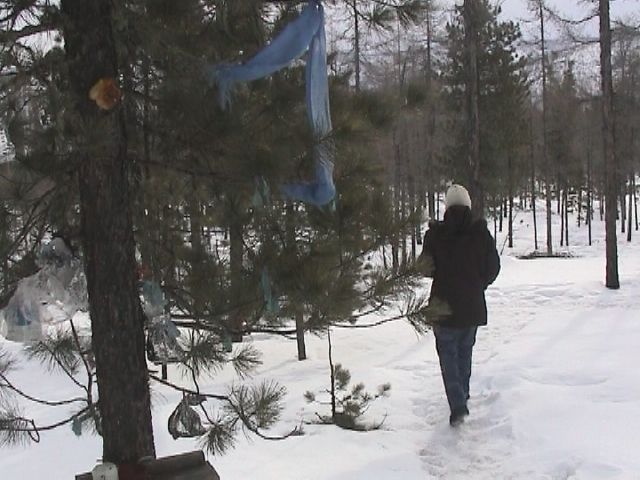
The shaman (saman or khaman in Evenk) is the central figure in this complex system of relationships that binds together humans, non-humans, animals, and spirits and constitutes the basis of shamanism. During the Soviet era of transformation and the persecution of religious specialists, shamanism visually disappeared from the ritual landscape among the Evenks and other Indigenous Siberian peoples. However, people continued to preserve shamanic traditions and conduct rituals in secret. Today, Evenk shamanism has undergone significant changes, leaving only a few ritual specialists who are recognised as shamans by other community members. However, the absence of shamans does not signal the end of shamanism among the Evenks. Communities continue to engage in shamanic rituals and maintain and transmit shamanic cosmologies. Shamanic costumes consist of a breastplate, caftan, footwear, and headdress, as well as various metal pendants and appliqués. The principal attributes of a shaman are the drum and drum beater.

Evenks
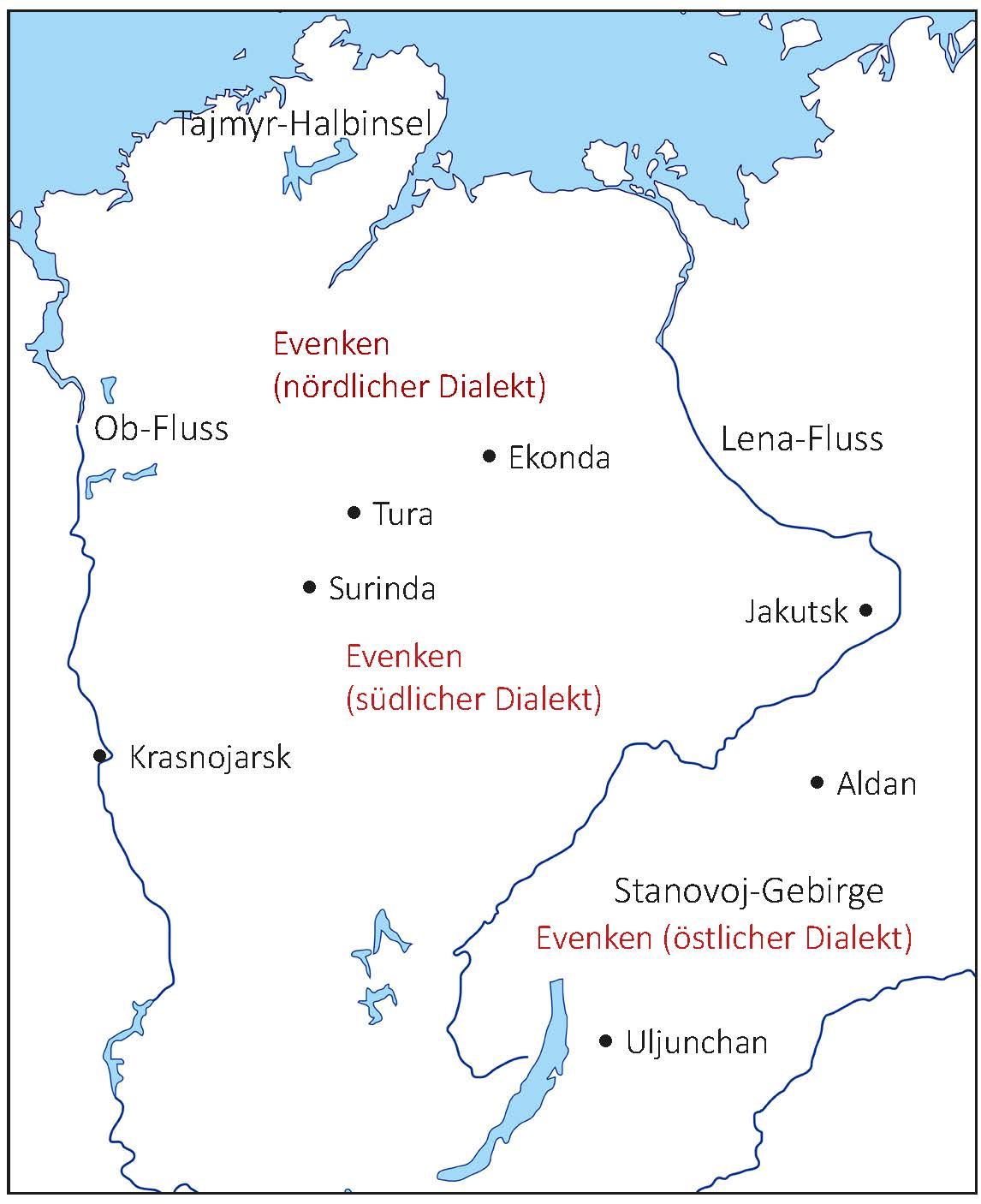
[Self-designation эвэнкил] The Evenks are hunters, reindeer herders, horse breeders, fishermen and gatherers. They are one of the most widespread and formerly largely nomadic peoples of Eurasia. Evenk reindeer husbandry is also referred to as forest reindeer husbandry. It is characterized by small herds of usually 10 to 40 animals, which were primarily used as pack animals. In addition to Russia, there are also Evenk-speaking communities in China. The Evenk language is a Tungusic language, which, together with Mongolian and Turkish, belongs to the Altaic language family. Shamanism was particularly widespread among the Evenks.
Worldview and Ritual

Hunting
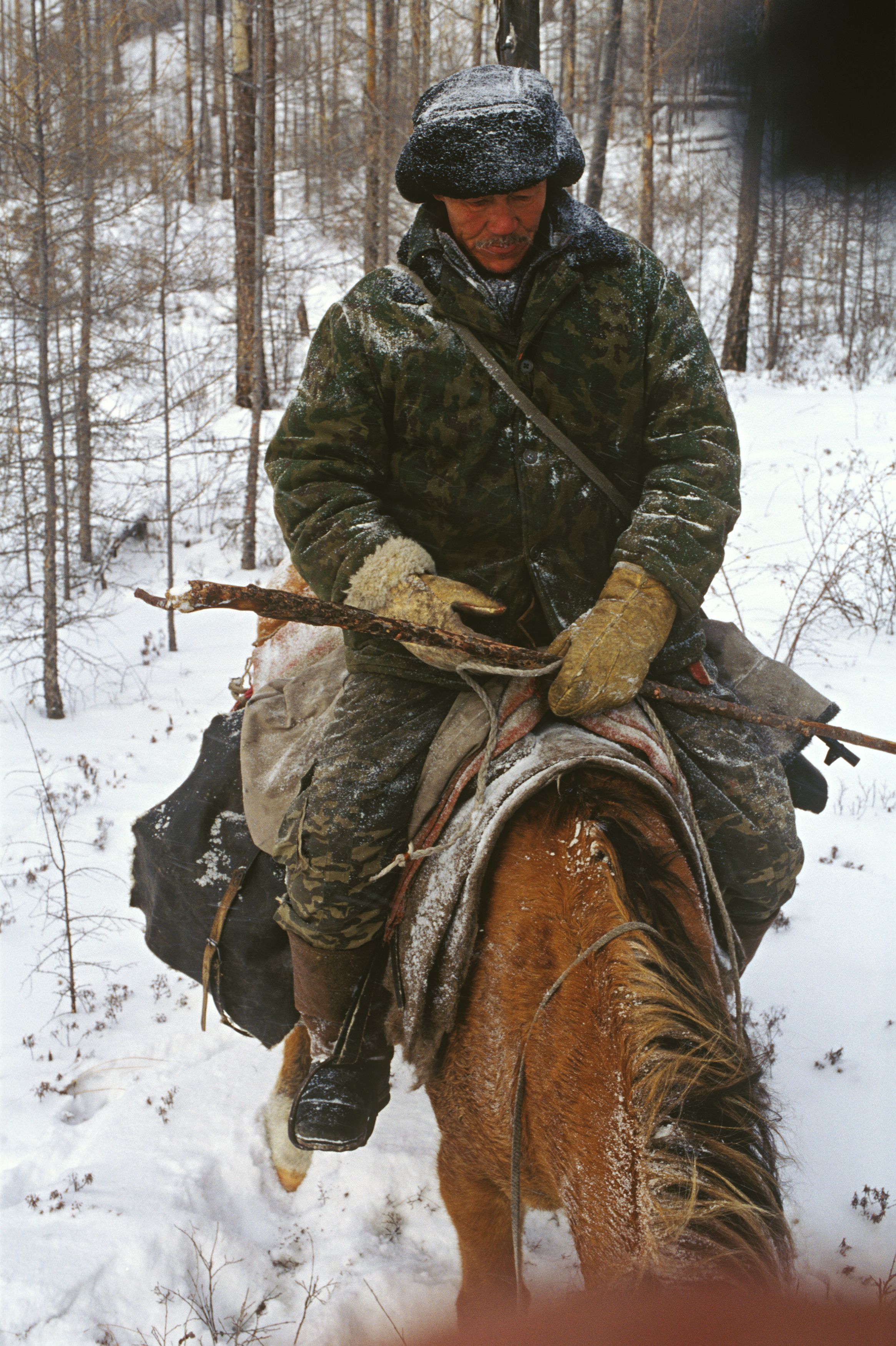
Traditionally, Evenks have hunted wild reindeer, moose, goats, Siberian musk deer, bears, and some forest birds, with the choice of species depending on the local environment. While hunting, some Evenk groups ride reindeer to travel long distances. When there were no reindeer, Evenks continued hunting on foot. Nowadays, people also use snowmobiles to cover huge distances. Evenk hunters rely upon subsistence knowledge and resource-tracking skills to live off the taiga. Stories about hunters who would walk or ski all the way through the taiga in search of a winter dwelling or an animal are quite popular among Evenks and celebrate the importance of navigation skills, physical strength, and traditional knowledge. Wayfinding and orientation skills include not only detailed knowledge of the landscape and vegetation but also the ability to recognise a variety of signs, both natural and man-made. The latter include ilkēr, ‘marks’ or notches on trees, which served as a means of communication between hunters. Hunting activities occupy a special place in the Evenk traditional calendar and cosmology. The traditional calendar divides the year into four seasons, each containing several subdivisions. The length of the year and of each season may vary. The names of the months relate to the type of main activity or to specific environmental conditions.
Even after the introduction of modern firearms, the Evenks continued to use their traditional hunting and trapping equipment for a long time. This included bows and arrows and spears, which were used to hunt larger animals. Self-triggering traps, some of which are very similar to those used by other peoples in Siberia, were used especially for trapping fur-bearing animals. Skis still play an important role in hunting today, as when covered with fur, they allow the hunter to glide almost noiselessly over the snow.
Reindeer herding
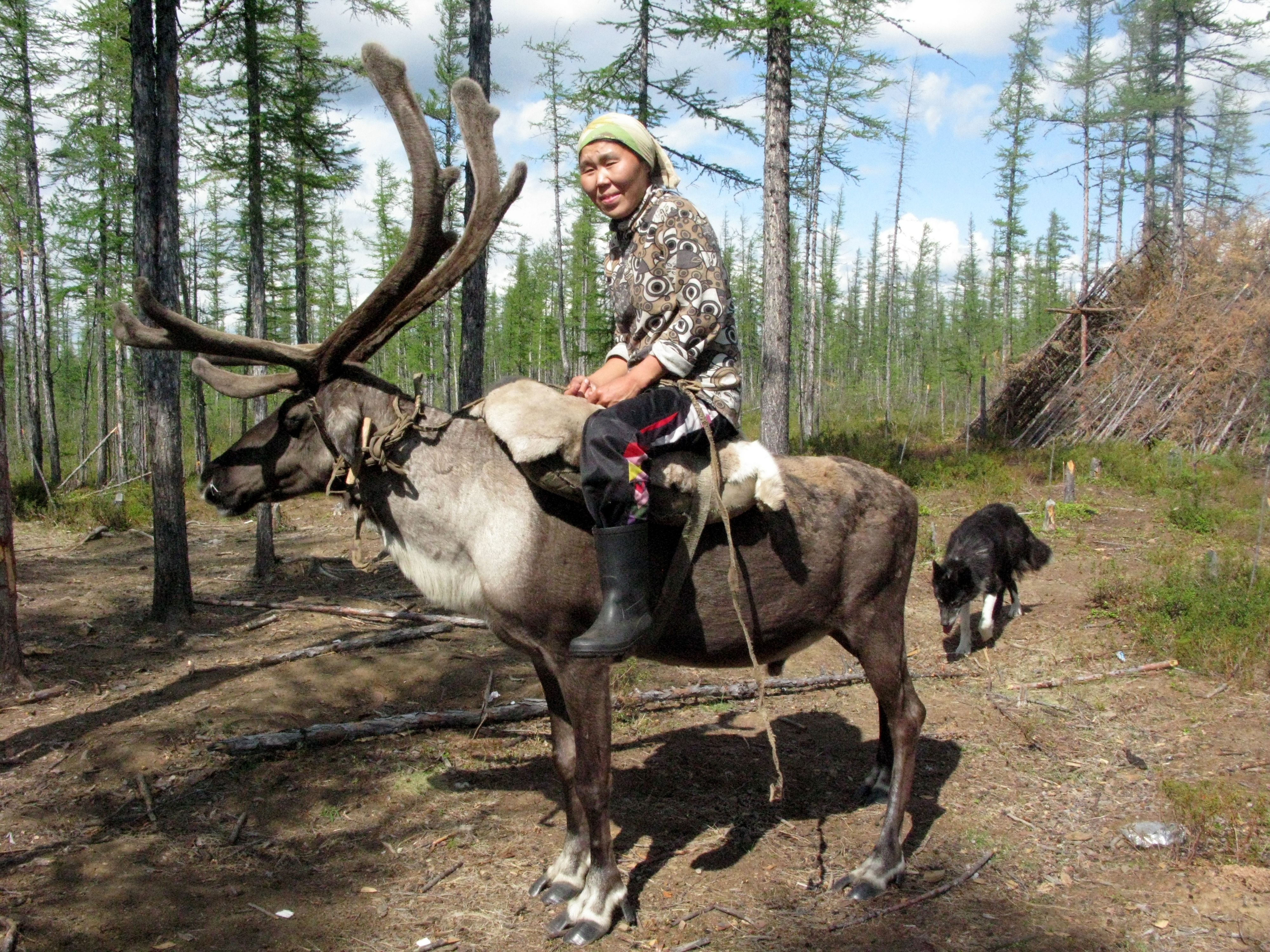
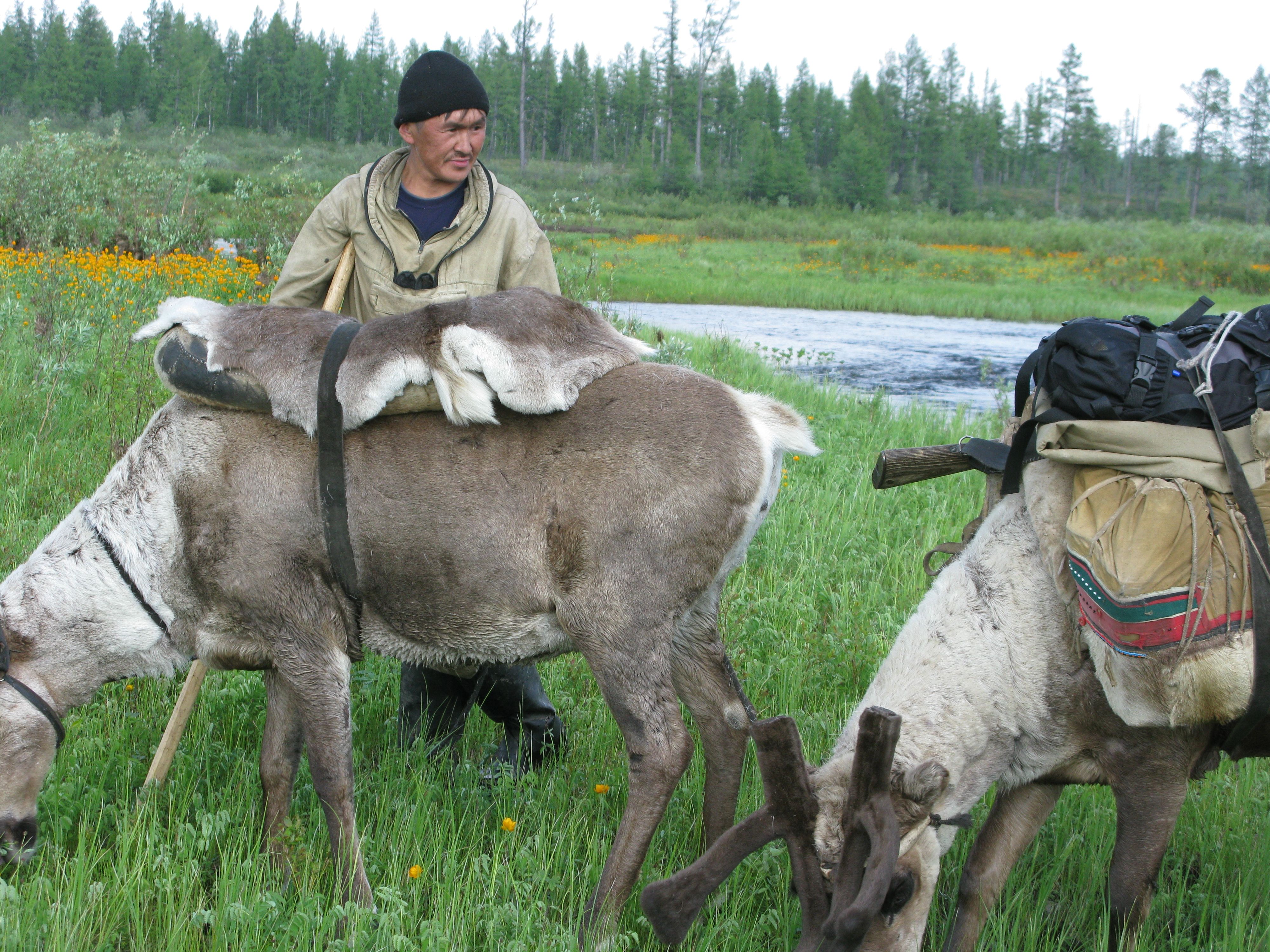
Hunting, fishing, and gathering have long formed the foundation of Evenk livelihoods and ways of life. However, it is through their distinctive form of reindeer herding – commonly referred to as the Evenk, or forest, type – that they have maintained and transmitted their culture and language across this extensive and environmentally diverse region. Their reindeer economy is characterised by small herds, usually ranging from 10 to 50 animals. Evenks use reindeer both as pack animals and for riding when moving from one place to another, as well as for hunting purposes. Although today only a relatively small proportion of Evenks remain involved in reindeer herding, either through Soviet-style brigades or private herds, many continue to spend significant periods of time in the forest, hunting, gathering, and visiting ritual, habitation, and other culturally significant sites. The terminology associated with reindeer herding is highly elaborate in the Evenk language. This is one area of vocabulary that has been preserved and passed on despite the shift towards other languages (Russian, Buryat, Sakha).
Clothing
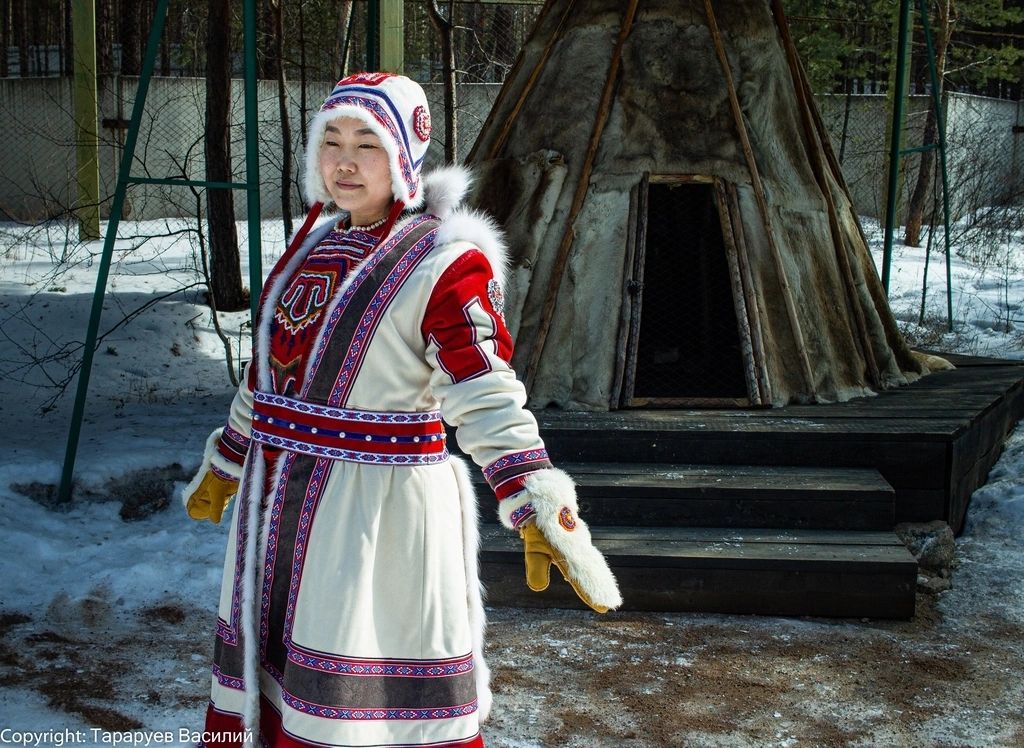
Traditional Evenk clothing reflects the mobility and subsistence practices central to Evenk life, being well adapted to prolonged walking and reindeer riding. Although broadly similar across the region, traditional clothing also displays distinct regional variations, particularly in its ornamentation and colour palette. Men’s and women’s clothing were largely similar, with the principal difference being the design of the breastplate. Women’s breastplates had a straight lower edge and were generally more elaborately decorated, whereas men’s breastplates had a pointed edge. Animal hides, particularly those of reindeer and moose, were traditionally used to make winter clothing and footwear, providing protection from the harsh conditions of the taiga. Today, some elements of traditional clothing continue to be used in everyday life, particularly mittens and footwear, while others, such as the breastplate, have become part of festive and ceremonial dress. Thus, despite significant changes in ancestral culture, some of the elements of traditional clothing continue to play an important role in contemporary Evenk life, while in the context of shamanic rituals, most elements of the traditional costume have been preserved.
Household items
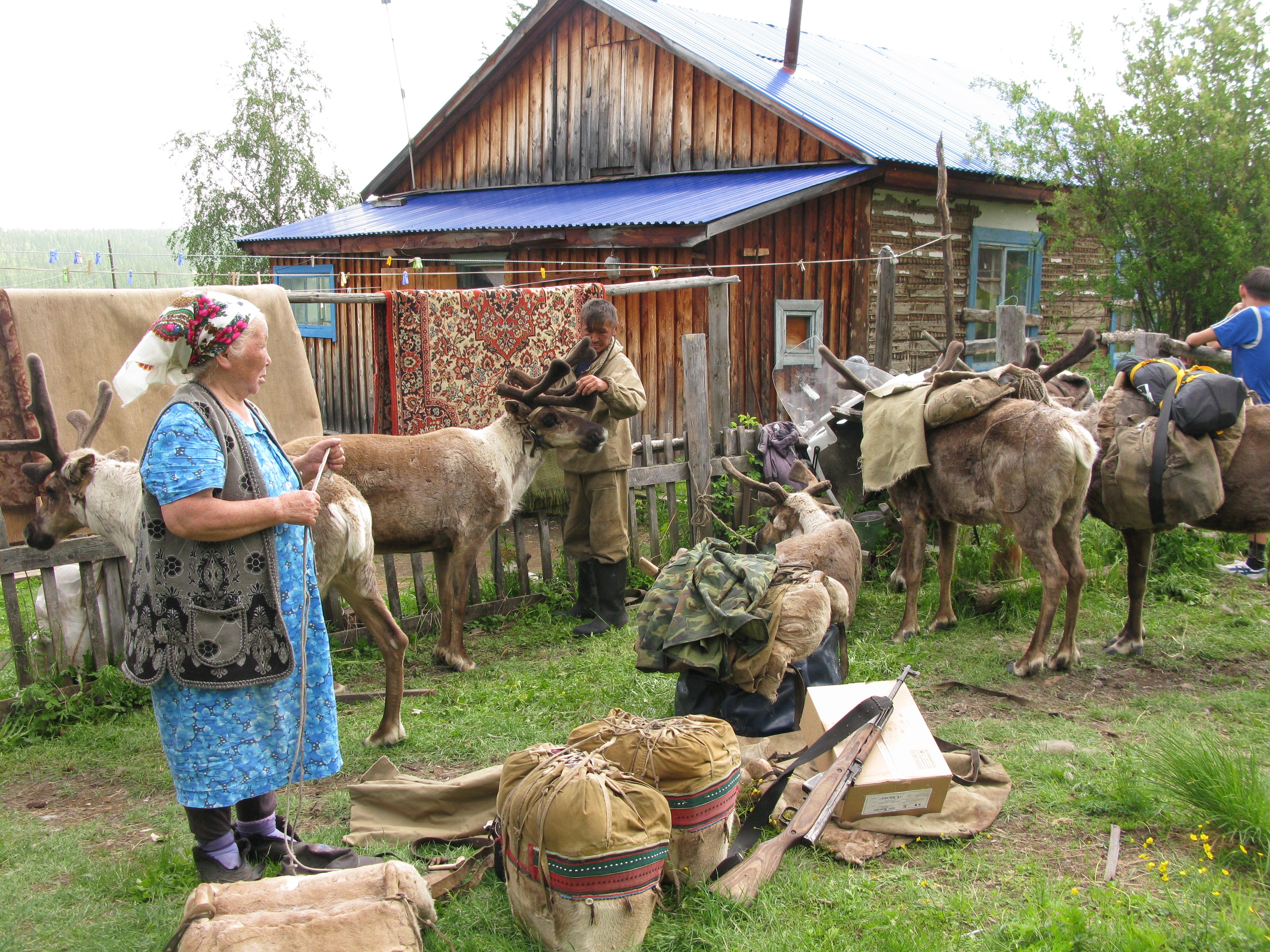
Evenks used and made a wide variety of wooden utensils, including ladles, bowls and spoons. Utensils, clothing, bedding and other household belongings were transported on sledges and in pack bags. Soft bags (pota, ikev’’e, seruk) were made from the skin of reindeer legs and wild reindeer head hide, as well as moose rovduga and fish skin; in some areas, seal skin was also used. Bags with a rigid base were made from birch bark. Evenk bags varied regionally in their shape, materials and ornamentation. One bag shown here, for example, was used to make butter by filling it with milk and attaching it to a reindeer saddle, where it would swing back and forth continuously during the migration. Otherwise, small bags were particularly popular with men for storing tobacco or, in larger versions, for their tools.
Group by
Contact
Kulturstiftung Sibirien gGmbH
Geschäftsführer:
Dr. Erich Kasten
Uferweg 4
D-16798 Fürstenberg/Havel
Tel +49(0)33093-60671
Partners
Musée d‘ethnographie de l‘Université de Bordeaux

Hokkaido Museum of Northern Peoples, Abashiri

Funding
Gefördert durch das Programm Östliche Partnerschaft und Russland des Auswärtigen Amts der Bundesrepublik Deutschland.